
How to Fix: SyntaxError: cannot assign to literal
This is a fundamental SyntaxError that means you got your variables and your values backwards. When you encounter SyntaxError cannot assign to literal, it usually…
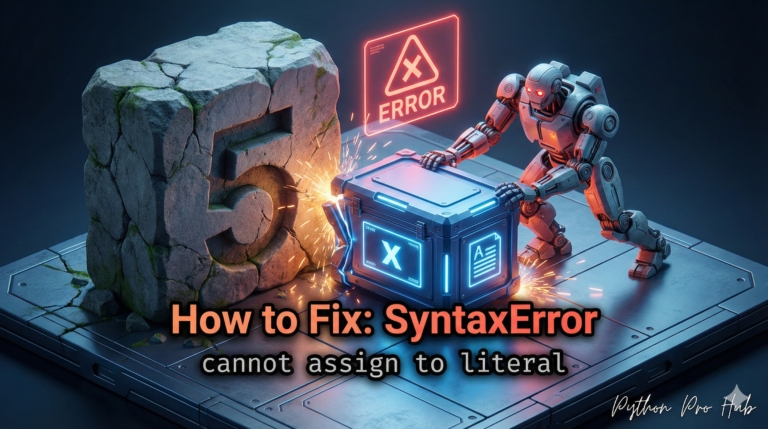
This is a fundamental SyntaxError that means you got your variables and your values backwards. When you encounter SyntaxError cannot assign to literal, it usually…
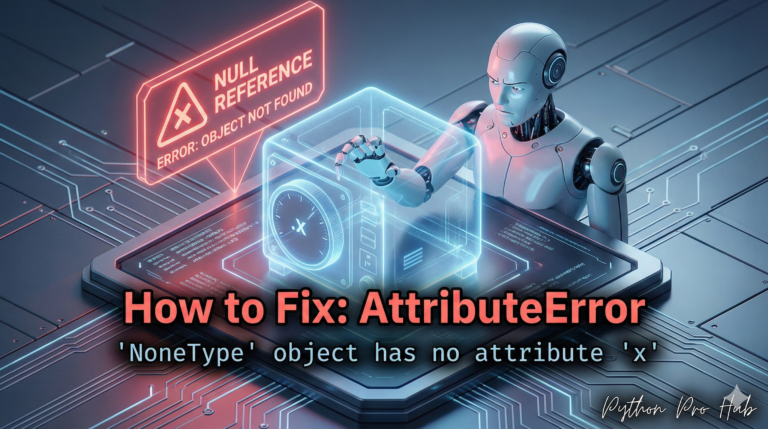
This is, without a doubt, the most common error in Python, and it’s frequently seen as an AttributeError NoneType issue. It means: You are trying…
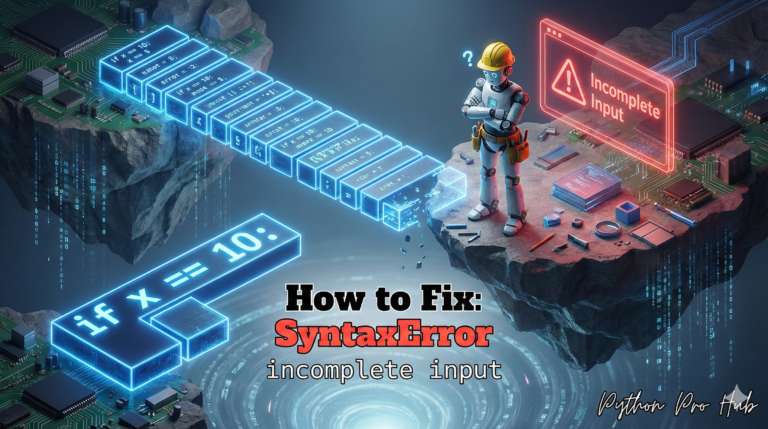
This is a SyntaxError you almost only see in the interactive Python shell (the REPL, or >>> prompt), not in a .py script. The SyntaxError…
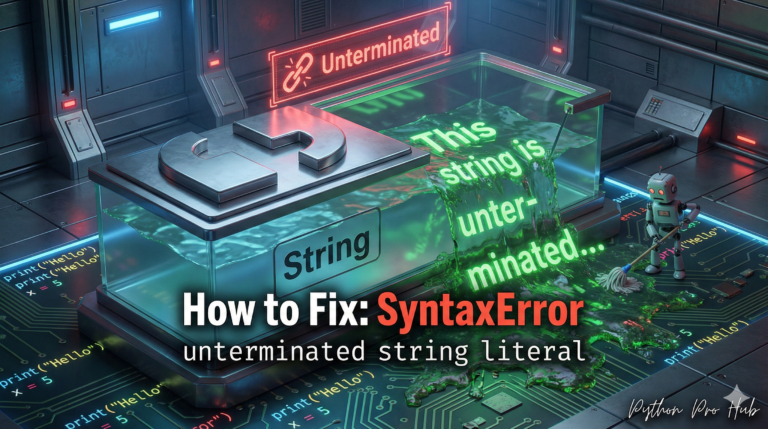
The SyntaxError unterminated string is a very common SyntaxError for beginners. It means: Python started reading a string, but it hit the end of the…
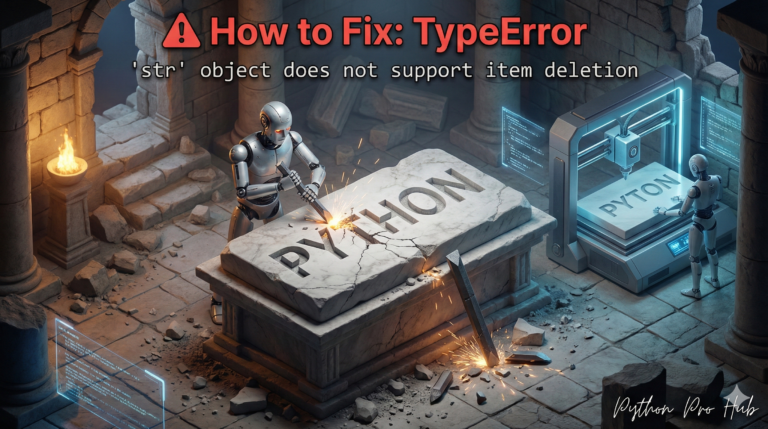
This TypeError str item deletion is a direct consequence of Python’s immutable strings rule. It’s the “delete” version of the item assignment error. It means:…
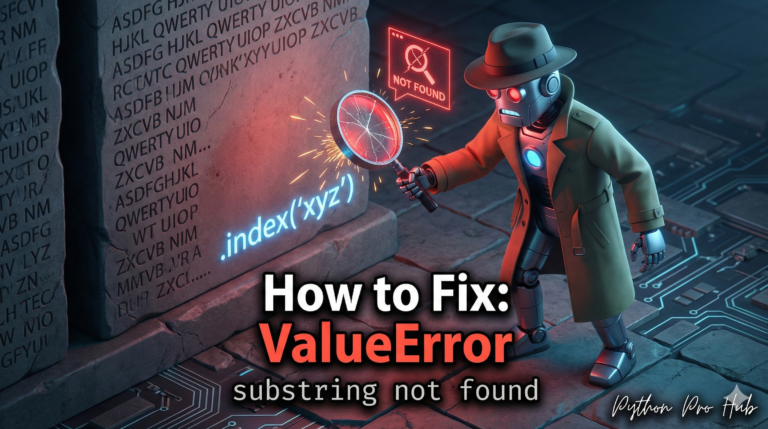
This is a common ValueError that happens when you are searching for a piece of text (a “substring”) inside a string, and it doesn’t exist….
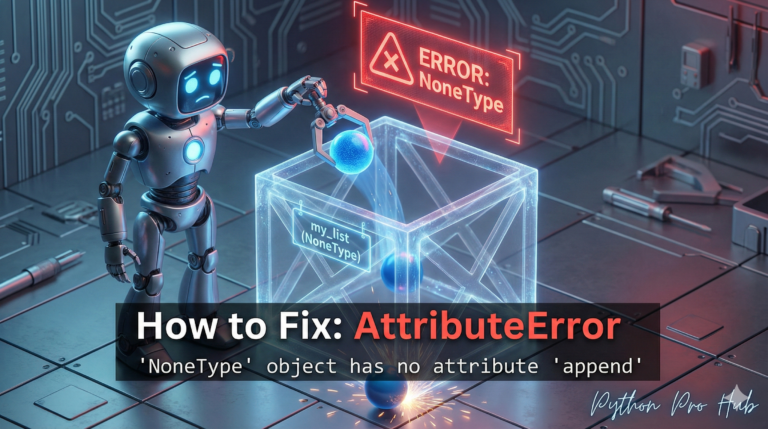
This AttributeError NoneType append is a classic combination of two common problems: a NoneType error and a List method error. It means: You are trying…
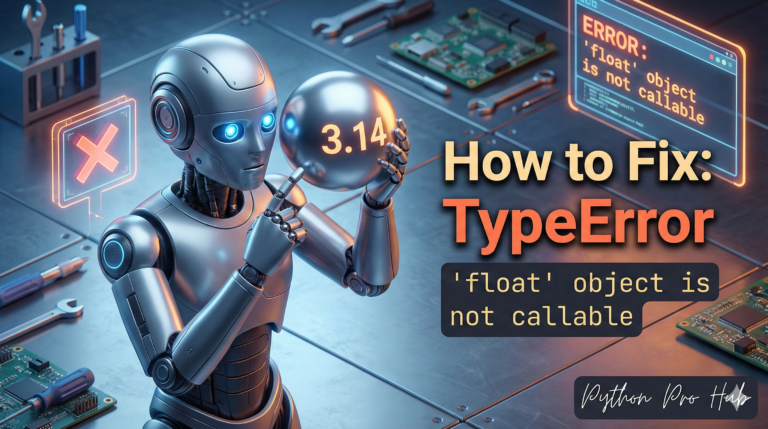
This error is a direct cousin to TypeError: ‘int’ object is not callable. The TypeError float not callable message means: “You are trying to use…
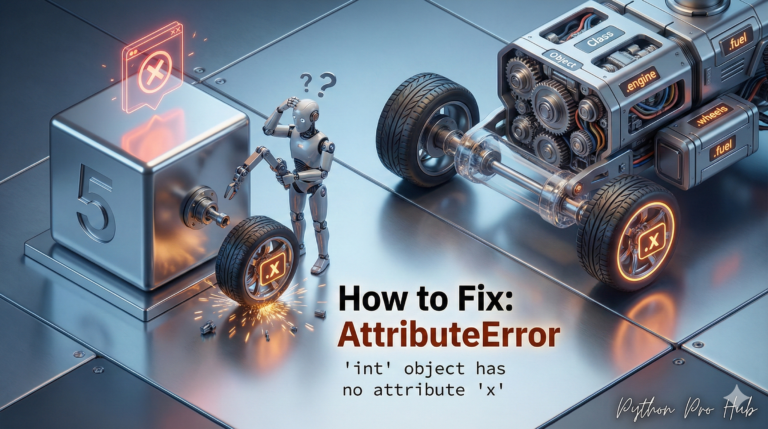
This is a fundamental AttributeError that means: “You are trying to use a method (like .append() or .lower()) on a simple number (an integer).” This…
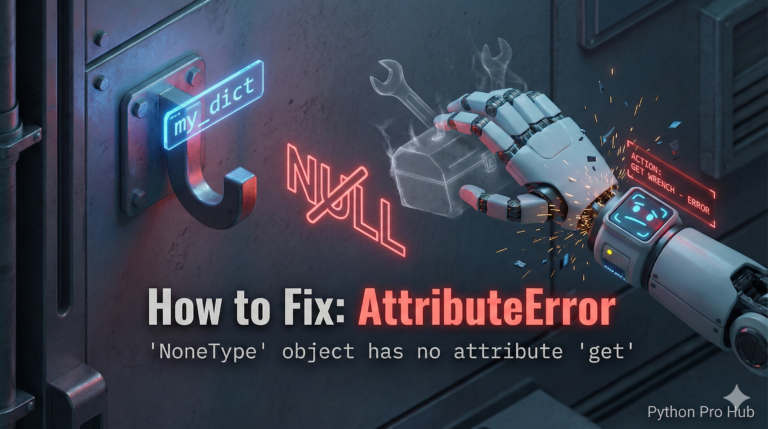
This error is a more advanced version of the typical KeyError. the AttributeError NoneType get, means: “You tried to use the .get() method, but the…