
Writing Data in Polars: write_csv, write_json, write_parquet
You’ve read, cleaned, and analyzed your data in Polars. Now you need to save your results. If you’ve ever wondered how Polars write data when…

You’ve read, cleaned, and analyzed your data in Polars. Now you need to save your results. If you’ve ever wondered how Polars write data when…

So far, we’ve used load_dataset to pull pre-made datasets (like “imdb“) from the Hugging Face Hub. But the real power is training an AI on…

We’ve told you Polars is faster than Pandas. When it comes to Polars vs Pandas Performance, now let’s prove it. We’ll create a 1GB (10…

This is the most important AI project of the “2026 Vision.” Building a Python RAG Chatbot is a practical example of how RAG (Retrieval-Augmented Generation)…

This “capstone” project combines all the Polars time-series skills you’ve learned. In this exercise, you’ll put Polars Time-Series Analysis techniques into practice. Goal: Take noisy,…
We’ve used AI to understand text, images, and audio. But what about relationships? For this, we need Graph Neural Networks (GNNs). A GNN is a…
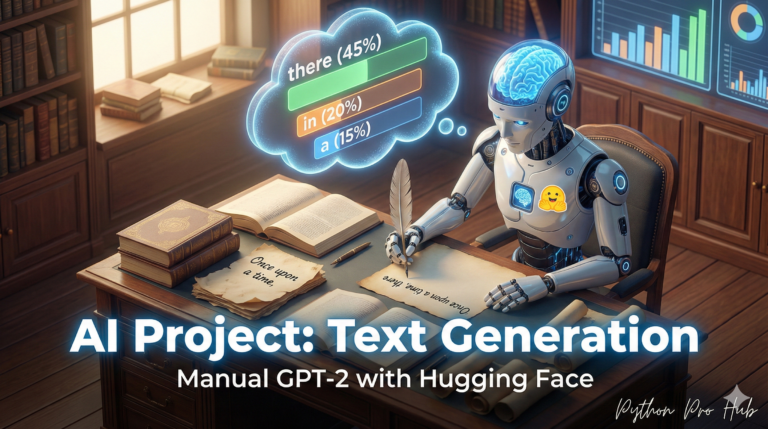
In our previous Hugging Face with gpt-2 project, we used the text-generation pipeline. This is great, but it hides all the powerful options. In this…
You’ve learned to read CSVs, Parquet, and Excel. But many APIs and modern databases (like MongoDB) output JSON files. In this tutorial, you’ll learn how…

In our Polars string guide, we covered basic text cleaning. When your data demands pattern-level precision, Polars regex delivers — it builds Regular Expression (Regex)…
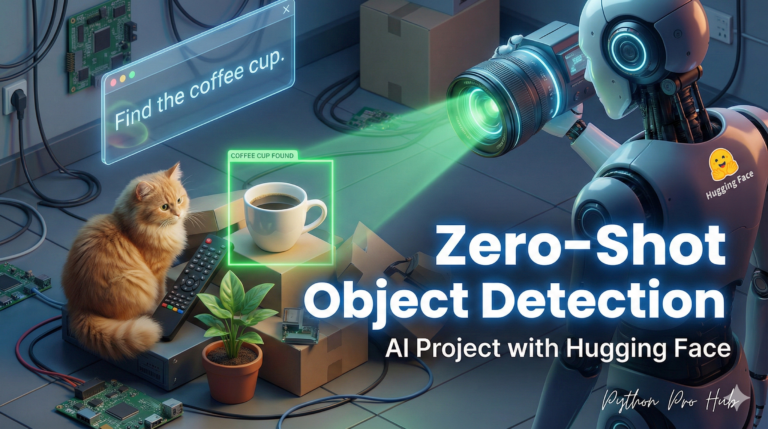
Zero-Shot Object Detection is one of the most exciting frontiers you can explore in this field. It’s the ultimate Computer Vision project, combining two of…