
Debugging Polars: Using explain() and profile() to Optimize Queries
Polars is fast because it has an “Optimizer” (like a SQL database) that rewrites your code before running it. But sometimes, queries are still slow….
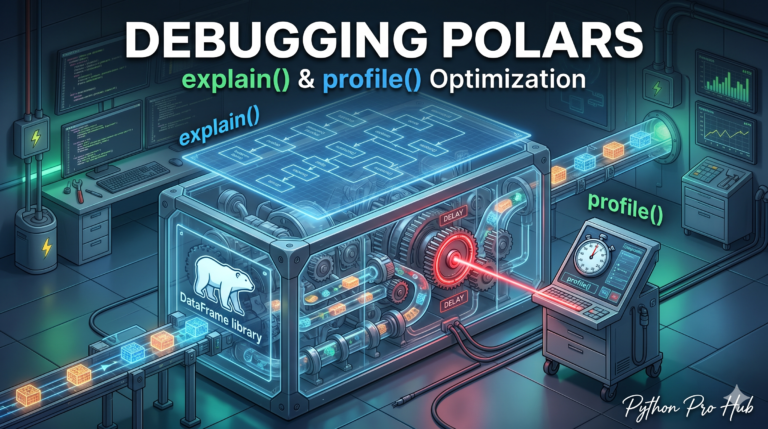
Polars is fast because it has an “Optimizer” (like a SQL database) that rewrites your code before running it. But sometimes, queries are still slow….

We’ve done Video Classification (detecting “Basketball”). But that’s just a label. Video Captioning generates a full sentence describing the scene, like “A man playing basketball…

We learned how to use DuckDB with Polars . But did you know Polars has its own SQL engine built-in? You don’t need to install…

We’ve conquered 2D images and video. Now, let’s enter the third dimension. If you’re interested in how Text to 3D Python works, Shap-E is a…
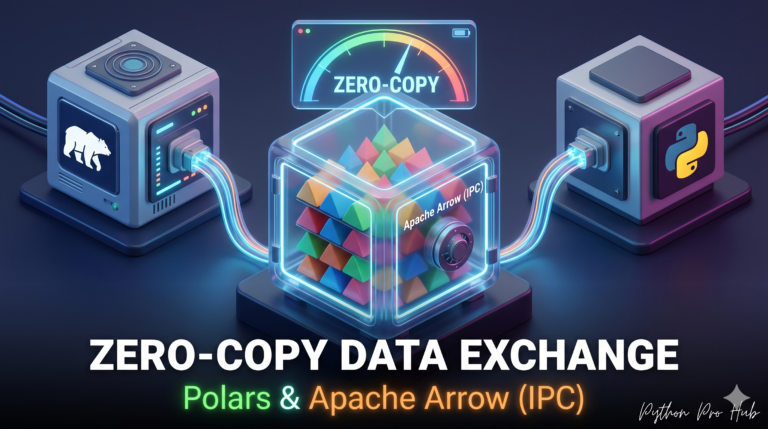
The secret to Polars’ speed isn’t just Rust; it’s Apache Arrow. Arrow is a standard memory format. Because Polars uses Arrow internally, it can send…
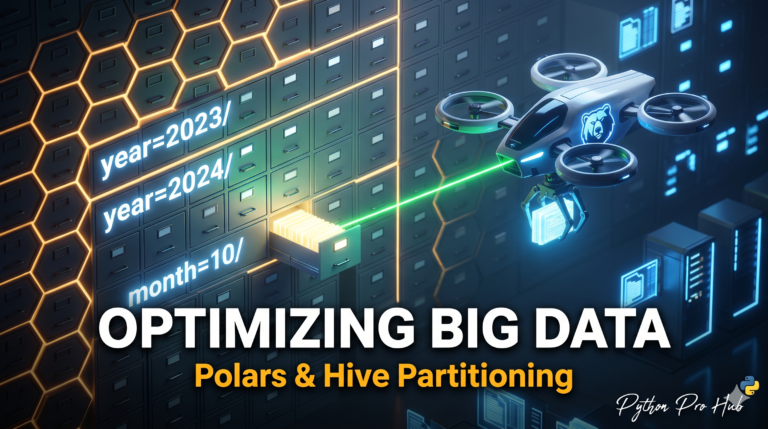
In Previous Weeks, we introduced partitioned datasets. Now, let’s dive into Hive Partitioning, the industry standard for organizing Big Data (used by Apache Spark, AWS…
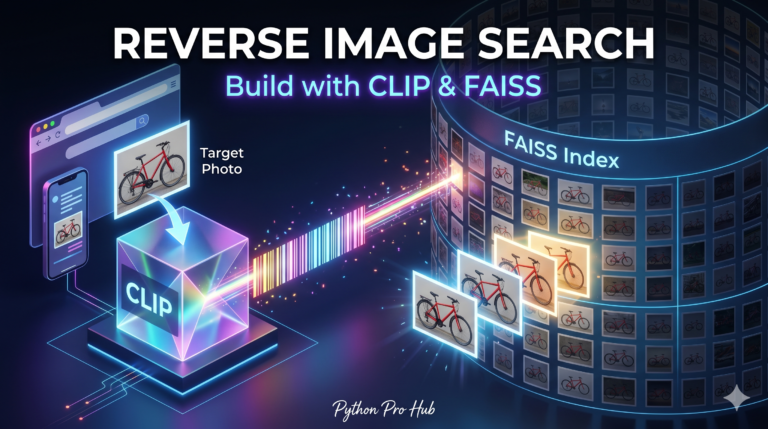
We’ve used Text Embeddings to search documents. Now, let’s use Image Embeddings to search photos. we’ll walk through how you can perform a Reverse Image…

You know left and inner joins. But the secret weapons of SQL pros are the Anti-Join and Semi-Join. Polars supports these natively, and they are…

Removing backgrounds is tedious manual work. In 2026, we let AI do it. We will use RMBG-1.4 (Remove Background), a state-of-the-art model available on Hugging…
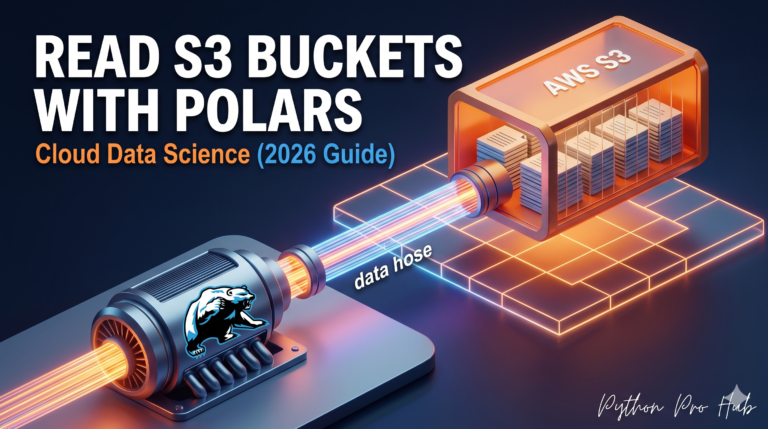
Professional data science happens in the cloud. Data usually lives in an Amazon S3 bucket (or Google Cloud Storage). Downloading a 50GB CSV to your…