
Combining DataFrames in Polars: The concat Method
We’ve used .join() to combine data based on a key (like a SQL JOIN). But what if you just want to stack two DataFrames on…

We’ve used .join() to combine data based on a key (like a SQL JOIN). But what if you just want to stack two DataFrames on…

This is a true “2026 Vision” project. Hugging Face VQA is at the core of what we’re building—we’re giving our AI eyes and a brain….
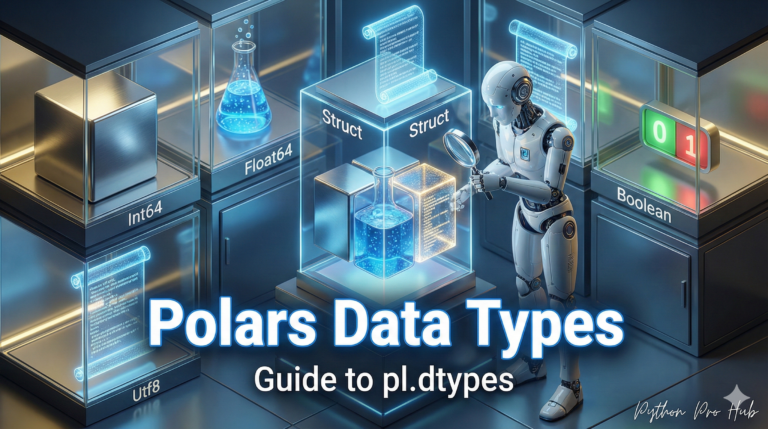
In Polars, choosing the correct data type (or “dtype”) is the most important step for performance and memory usage. Using a massive Int64 for a…

This article serves as a Hugging Face datasets guide. We’ve used the datasets library to load data for fine-tuning, but what is it? It’s a…

While Parquet is the fastest format, the business world runs on Excel. Polars read Excel Via a read_excel function to load these files directly into…

The Hugging Face Document AI is one of the most commercially valuable AI tasks. We’re moving beyond simple OCR (which just dumps text) to an…

We’ve covered two types of window functions in Polars. Now, we’ll look at how to use Polars group_by_rolling functionality. group_by_rolling() is the third type. It’s…

What if you have a column that contains lists, and you want to perform an operation on every item inside every list? In these situations,…

We’ve used the Hugging Face pipeline many times. But how do you know which model name to use? How do you find a model to…
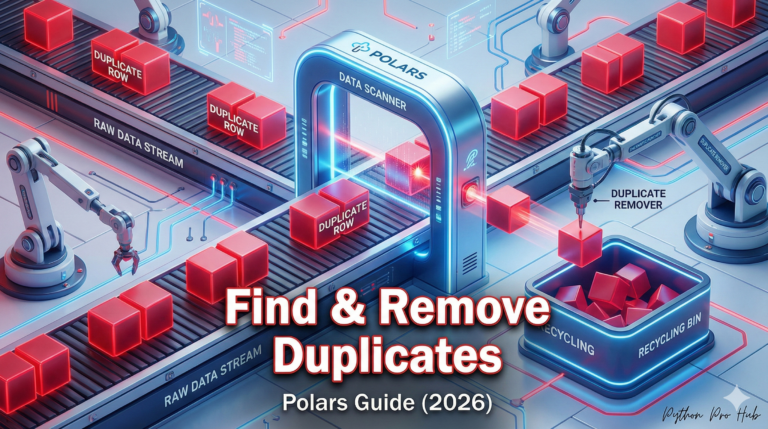
Duplicate data is a silent killer for analysis and machine learning. Polars provides high-speed, easy-to-use methods for finding and removing duplicate rows. The Setup Let’s…