
How to Fix: TypeError: method takes 1 positional argument but 2 were given
You called my_object.method(x) and passed one argument. Python counted two. The second argument is the instance itself — Python injected it automatically, and your method…
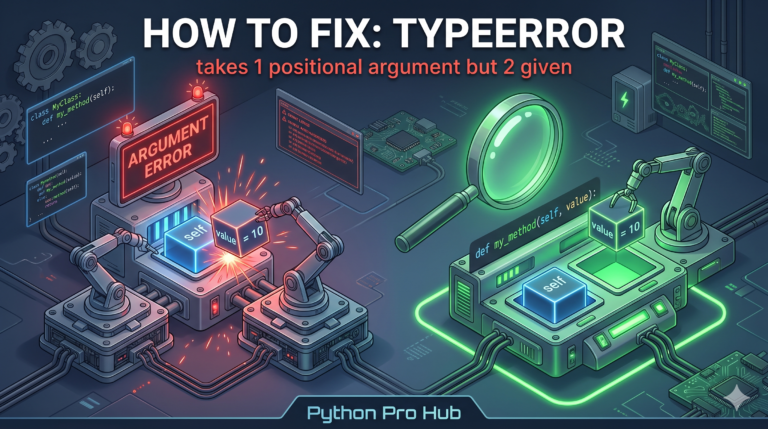
You called my_object.method(x) and passed one argument. Python counted two. The second argument is the instance itself — Python injected it automatically, and your method…
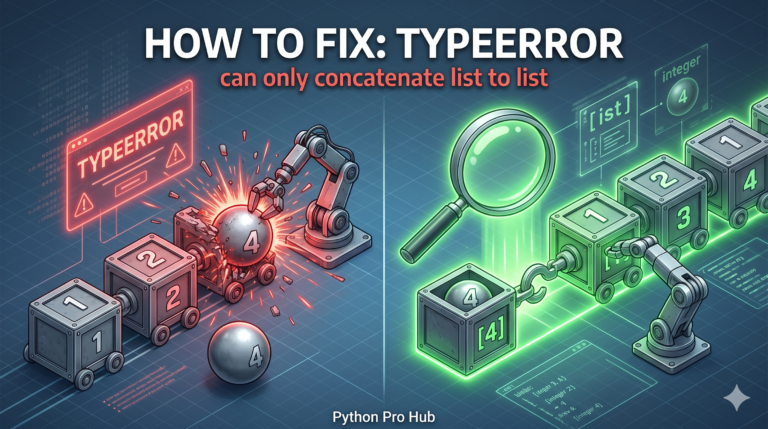
This error happens when you try to add an item to a list using the + operator, but the item isn’t a list itself. This…
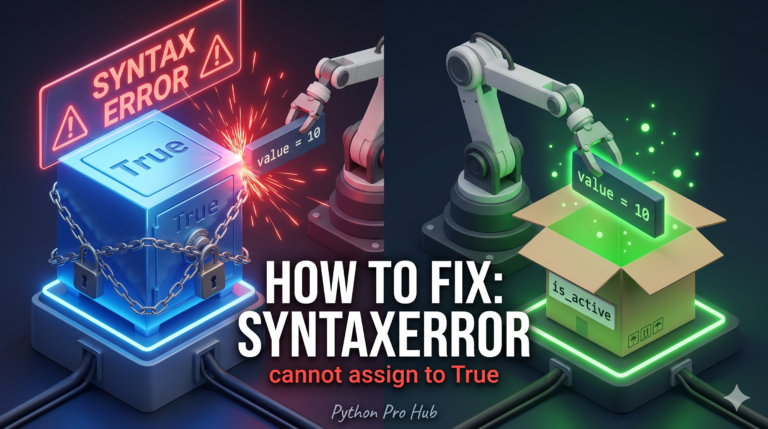
This error SyntaxError cannot assign to True means you are trying to use a Reserved Keyword as a variable name. In older versions of Python…
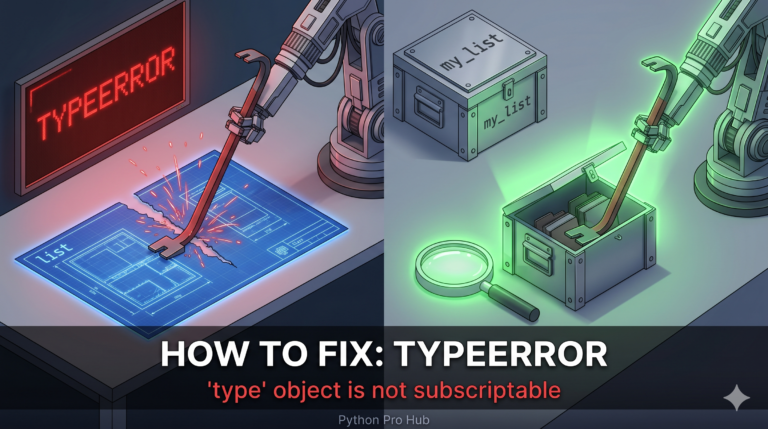
This TypeError type object not subscriptable is common if you are learning modern Python but running code on an older server or Environment (like Python…
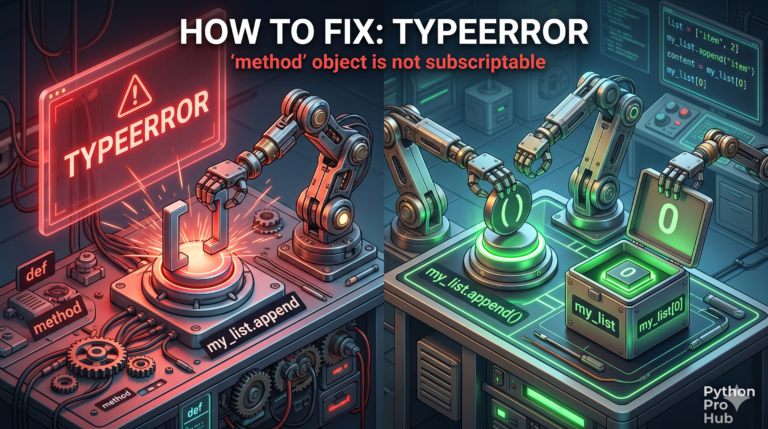
This TypeError method not subscriptable is very similar to the AttributeError we saw with APIs. It means: “You are trying to slice [] a function…
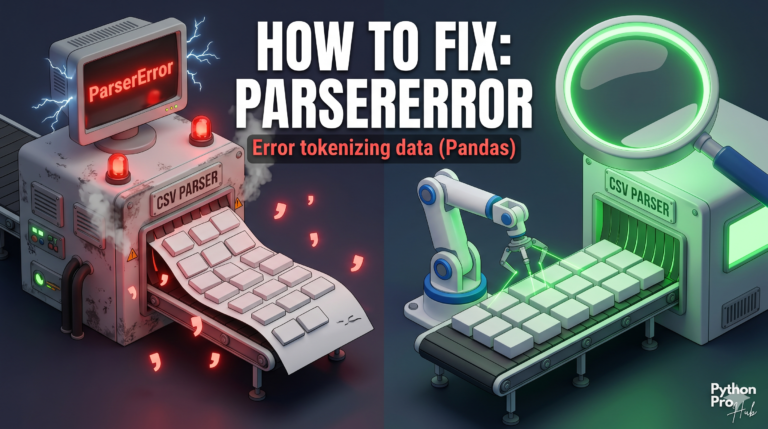
This pandas ParserError is the most common error when reading “messy” CSV files found in the wild. which signals there’s a problem parsing your data….
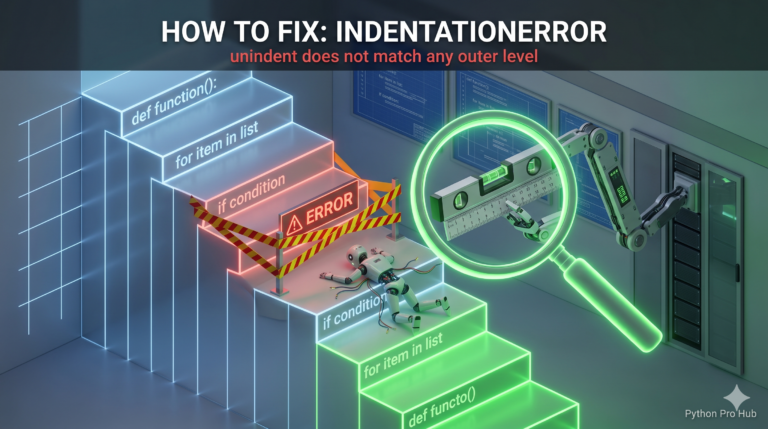
An IndentationError unindent is one of the most frustrating errors for beginners because it’s often invisible. It means: “You tried to end a block of…
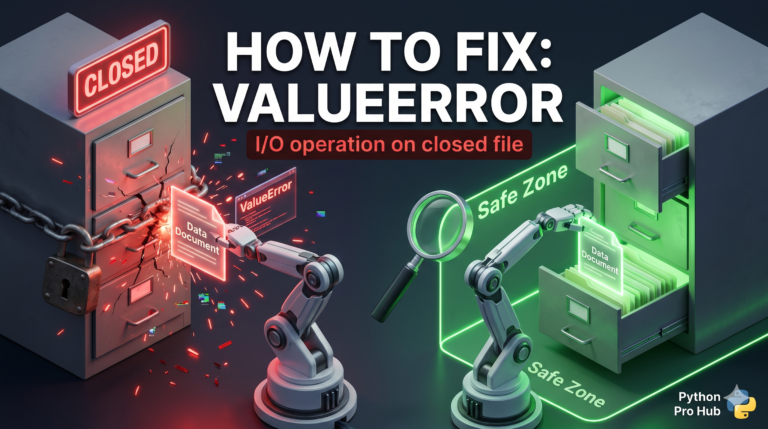
This error is a direct result of misunderstanding how the with statement works. The ValueError closed file message typically happens when you try to operate…
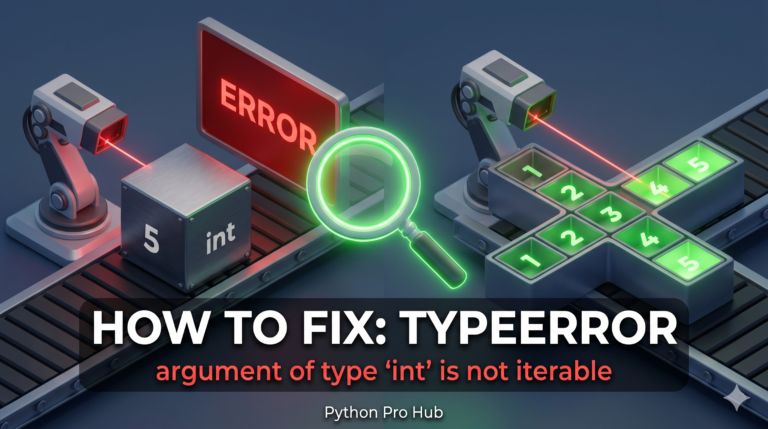
This error looks similar to loop errors, but it targets a specific mistake — using the in operator against a plain number. The TypeError: argument…
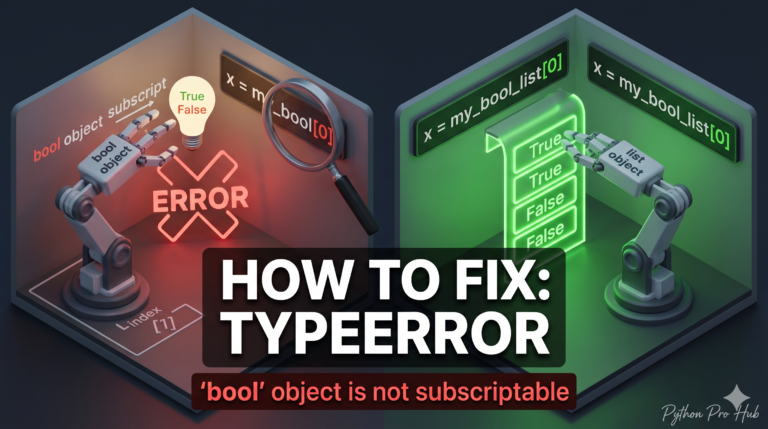
This TypeError bool not subscriptable follows the pattern of int and NoneType errors. It means: “You are trying to use square brackets [] (to access…