
Polars Data Types: How to cast and Convert Columns
When you load a CSV, Polars (and Pandas) often guesses the data types. Sometimes, it guesses wrong, loading a number column (like 5.0) as a…
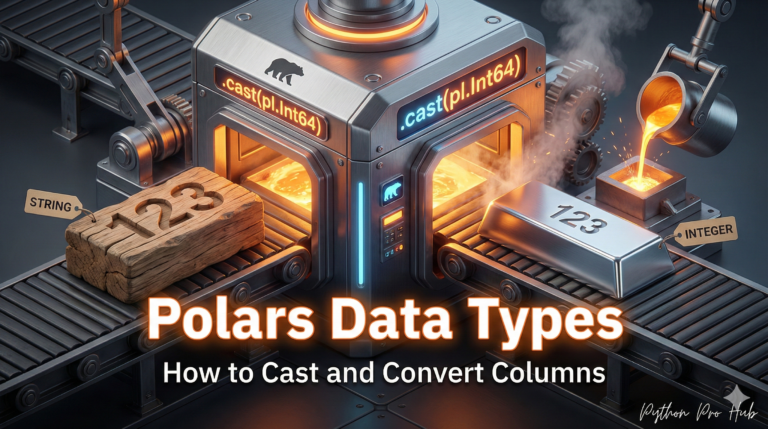
When you load a CSV, Polars (and Pandas) often guesses the data types. Sometimes, it guesses wrong, loading a number column (like 5.0) as a…

This is one of the most incredible “2026 Vision” projects. You’ve used Zero-Shot for text, but what about sound? Zero-Shot Audio Classification opens up fascinating…

Real-world data is often “sparse.” You might have sales data for Monday and Friday, but nothing for Tuesday, Wednesday, or Thursday. This is where polars…

We’ve learned how to group time by month (using group_by_dynamic), but what about calculating a “7-day moving average”? This is where Polars rolling functions can…

You’ve mastered the fast Polars Expression API. But what if you need to run a complex Python function that Polars doesn’t have?, so it’s Polars…
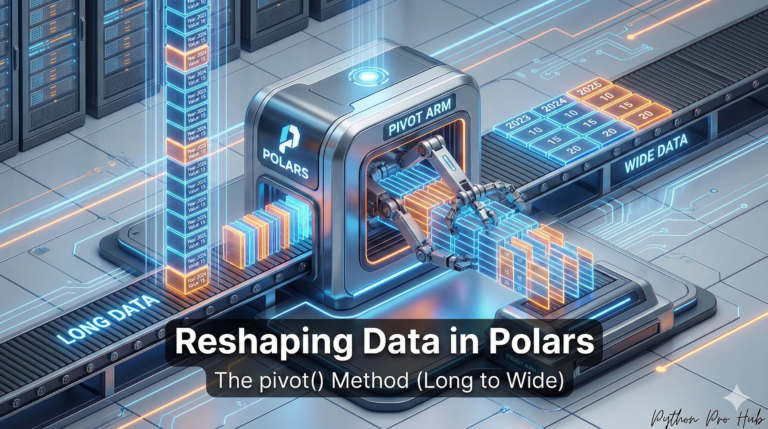
In data analysis, you’re constantly reshaping data. we used melt() to turn “wide” data into “long” data. Today, we’re doing the opposite. pivot() is the…

Let’s say you have a 10GB file with a “Country” column. The string “United States of America” might appear 50 million times, using a massive…

We’ve used the Polars Expression API a lot. But what is an expression? An expression, or pl.Expr, is a recipe for a calculation. It’s not…

So far, we’ve used Polars in “Eager” mode (like Pandas), where df.filter() runs immediately. However, the Polars Lazy API offers a different approach to working…
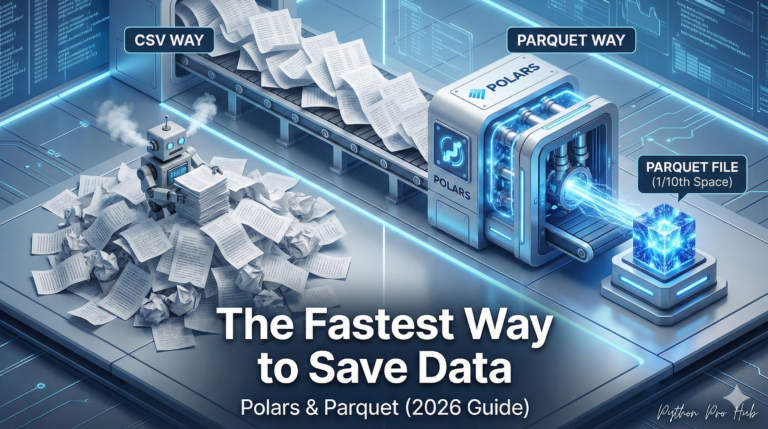
You’ve been taught to use .csv files for everything. This is fine for small files, but for data science in 2026, it’s slow and inefficient….