
Time-Series Magic: The Polars join_asof (Merging Non-Exact Times)
In standard data (SQL), you join on exact matches (ID = ID). In time-series data (Finance, IoT), timestamps rarely match exactly, which is where Polars…

In standard data (SQL), you join on exact matches (ID = ID). In time-series data (Finance, IoT), timestamps rarely match exactly, which is where Polars…

You’ve seen them on social media: QR codes that look like anime girls, futuristic cities, or Japanese paintings, but still work when you scan them….
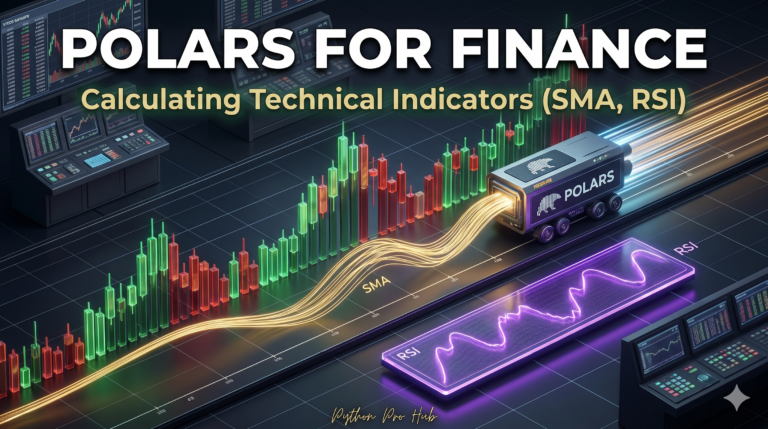
Financial datasets are fundamentally time-series data, making execution speed and temporal memory alignment critical. This is especially true when working with Polars Finance Indicators, which…

Standard Stable Diffusion takes 20-50 “steps” to denoise an image, which takes seconds. SDXL Turbo Python is a breakthrough model that generates high-quality images in…
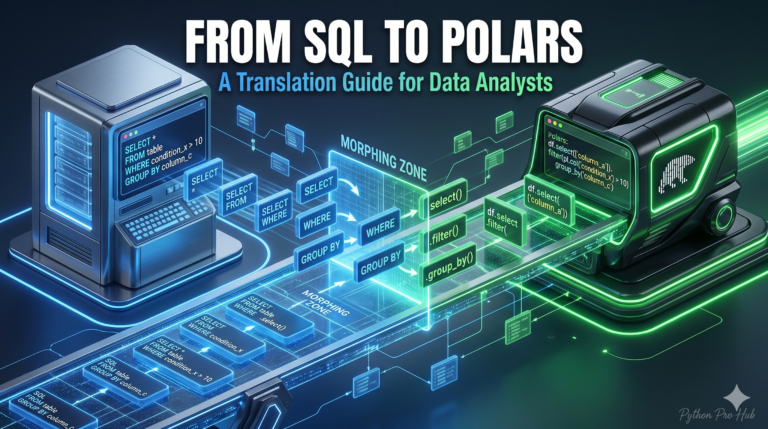
If you already know SQL, you fundamentally understand how Polars operates. Unlike Pandas, which forces you into an imperative, row-by-row mindset, Polars is built on…
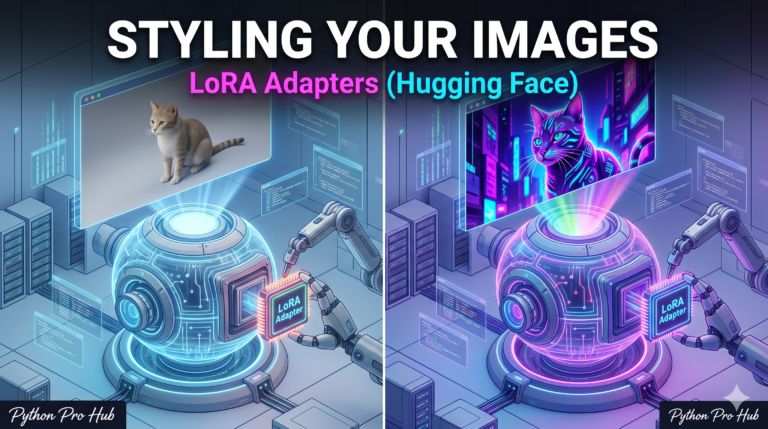
Standard Stable Diffusion is great, but sometimes it struggles to hold a specific style consistently. If you want to unlock even more control and versatility,…

Traditional machine learning workflows often suffer from excessive memory overhead. When training models on tabular data with pandas-based pipelines, data frequently passes through multiple intermediate…

We built a RAG chatbot using FAISS, which runs locally. That works for 1,000 documents. But what if you have 100 million? You need a…

In Polars, standard aggregations (sum, mean) work vertically (down a column). But what if you want to sum across columns? For this, the Polars fold…

In Document QA Project, we used LayoutLM to read documents. But that required a separate OCR step to find the text first. Now, Hugging Face…