
Time-Series in Polars: rolling() Window Functions
We’ve learned how to group time by month (using group_by_dynamic), but what about calculating a “7-day moving average”? This is where Polars rolling functions can…
Discover the field of Data Science and its significant impact on decision making. Learn techniques to harness its power for success.

We’ve learned how to group time by month (using group_by_dynamic), but what about calculating a “7-day moving average”? This is where Polars rolling functions can…

You’ve used Hugging Face to understand text, generate it, and even transcribe audio. Now, let’s use it to break the language barrier with Hugging Face…

You’ve mastered the fast Polars Expression API. But what if you need to run a complex Python function that Polars doesn’t have?, so it’s Polars…

This is one of the original tasks that made models like BERT famous. A “Masked Language Model” (MLM) is trained by having words randomly “masked”…
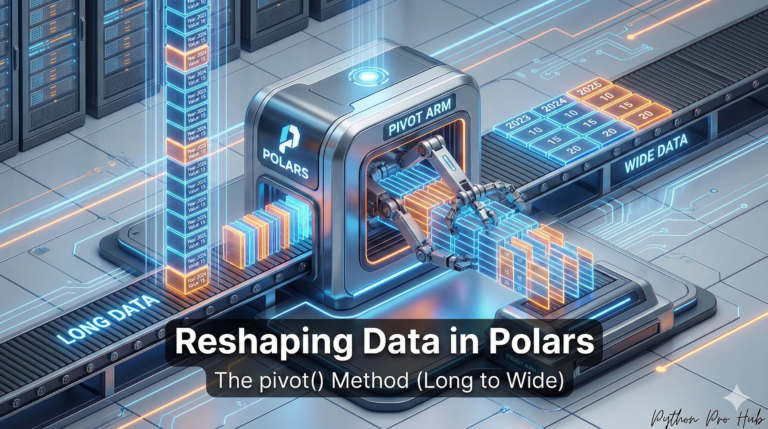
In data analysis, you’re constantly reshaping data. we used melt() to turn “wide” data into “long” data. Today, we’re doing the opposite. pivot() is the…

We’ve used Stable Diffusion to create images. Now, let’s use it to edit them. In this guide, we’ll explore Hugging Face Inpainting and how it…

Let’s say you have a 10GB file with a “Country” column. The string “United States of America” might appear 50 million times, using a massive…

This is the next level of Computer Vision. Hugging Face Image Segmentation is an innovative approach transforming what computers see and understand. This is how…

We’ve used the Polars Expression API a lot. But what is an expression? An expression, or pl.Expr, is a recipe for a calculation. It’s not…
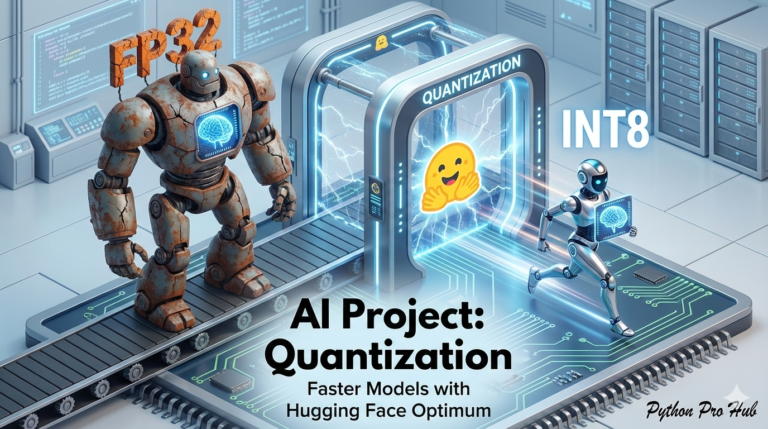
You’ve built amazing AI models, but they’re huge and slow. A model like gpt-2 can be 500MB+ and slow to run on a CPU. Hugging…