
High-Performance NLP: Pre-processing Text with Polars (2026 Guide)
When preparing text data for an AI model, you’re often working with millions of rows. For this reason, many practitioners are interested in Polars NLP…

When preparing text data for an AI model, you’re often working with millions of rows. For this reason, many practitioners are interested in Polars NLP…

It’s very common to have a column in your data that contains a JSON string. In Pandas, this is slow and difficult to work with….
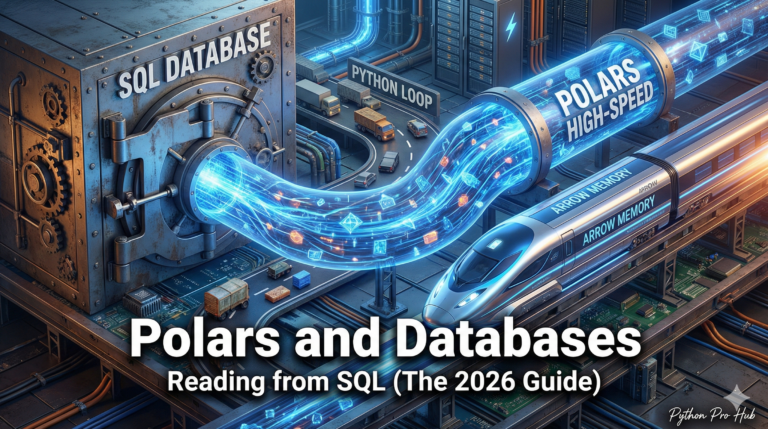
In the real world, data doesn’t just live in CSV files. It lives in SQL databases. If you’re looking for a simple way to use…
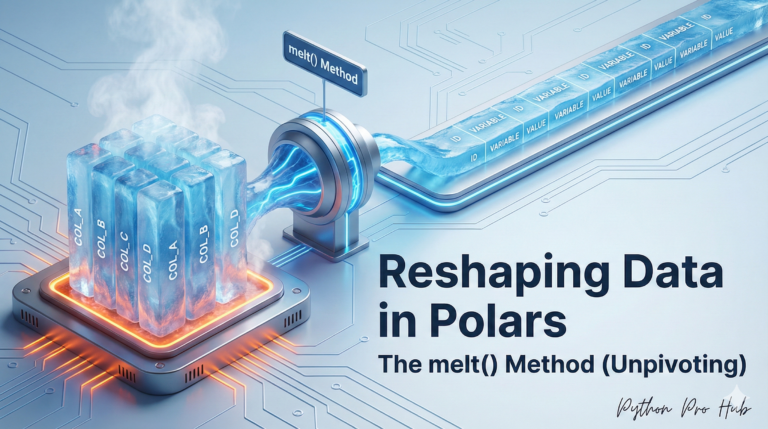
Your data is often in a “wide” format, like a spreadsheet, but analysis tools (like plotting libraries) prefer “long” format. One useful function for this…

One of the most common data tasks is creating a new column based on a condition. In this tutorial, we’ll focus on using Polars when…

Just loading dates isn’t enough. For real analysis, you need to “engineer features” from them, like “What day of the week do most sales happen?”…

Real-world data from APIs often comes as nested JSON. Pandas struggles with this, but Polars has two powerful expressions built for it: explode and unnest….
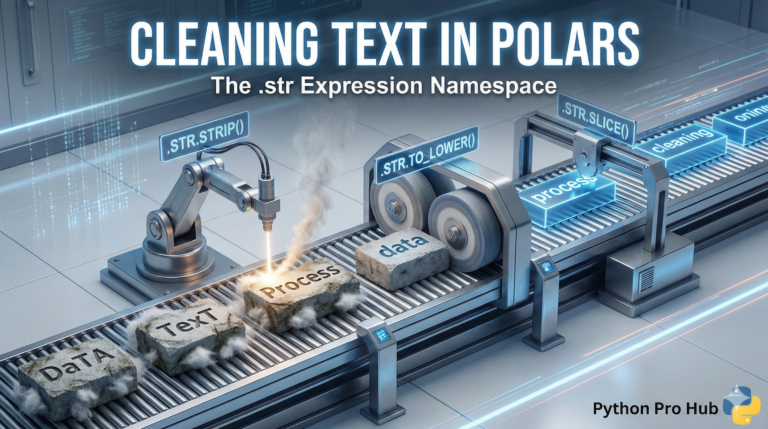
Text data is almost always messy. One of the most efficient ways to tackle this is with Polars string manipulation. In Pandas, you use .str…

One of the most common tasks in data analysis is “resampling” time data. For example, turning a list of daily sales into “Total Monthly Sales.”…

Just like Pandas has NaN, Polars has null to represent missing or empty data. Before you can analyze a dataset, you must have a strategy…