
Debugging Polars: Using explain() and profile() to Optimize Queries
Polars is fast because it has an “Optimizer” (like a SQL database) that rewrites your code before running it. But sometimes, queries are still slow….
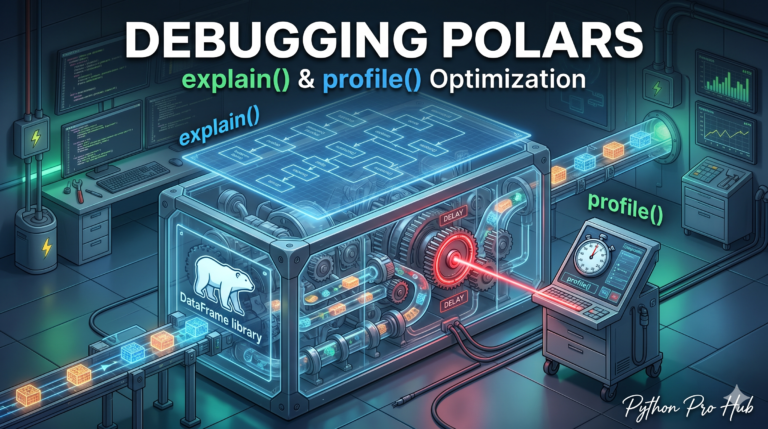
Polars is fast because it has an “Optimizer” (like a SQL database) that rewrites your code before running it. But sometimes, queries are still slow….

We learned how to use DuckDB with Polars . But did you know Polars has its own SQL engine built-in? You don’t need to install…
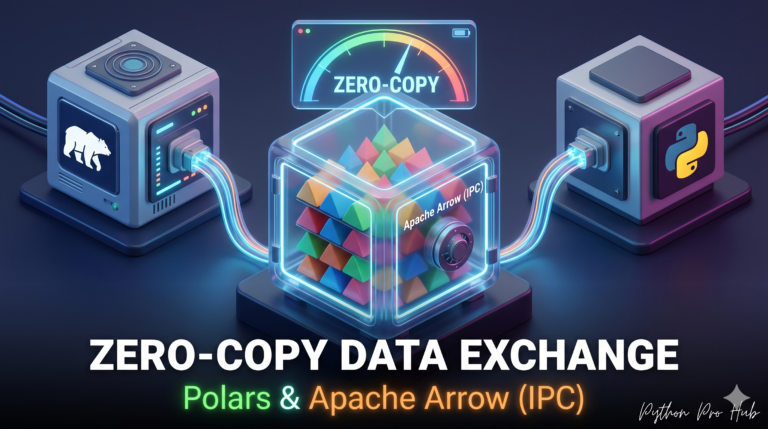
The secret to Polars’ speed isn’t just Rust; it’s Apache Arrow. Arrow is a standard memory format. Because Polars uses Arrow internally, it can send…

The infamous ValueError truth value Series message is the #1 error you will face when moving from standard Python to Data Science (Pandas or Polars)….
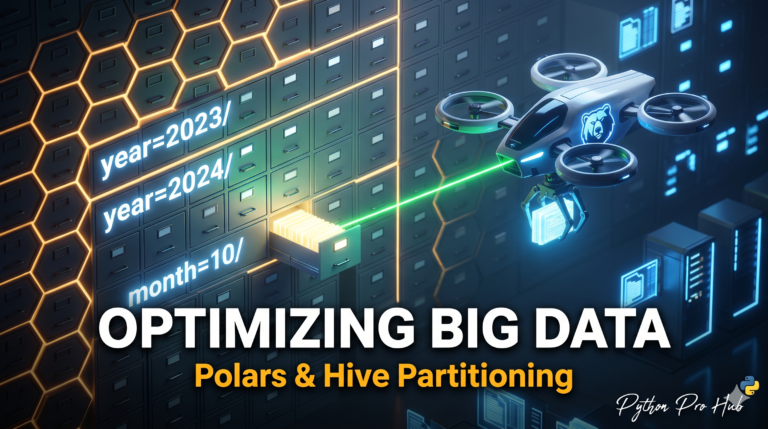
In Previous Weeks, we introduced partitioned datasets. Now, let’s dive into Hive Partitioning, the industry standard for organizing Big Data (used by Apache Spark, AWS…

You know left and inner joins. But the secret weapons of SQL pros are the Anti-Join and Semi-Join. Polars supports these natively, and they are…

Professional data science happens in the cloud. Data usually lives in an Amazon S3 bucket (or Google Cloud Storage). Downloading a 50GB CSV to your…

In standard data (SQL), you join on exact matches (ID = ID). In time-series data (Finance, IoT), timestamps rarely match exactly, which is where Polars…

Financial datasets are fundamentally time-series data, making execution speed and temporal memory alignment critical. This is especially true when working with Polars Finance Indicators, which…
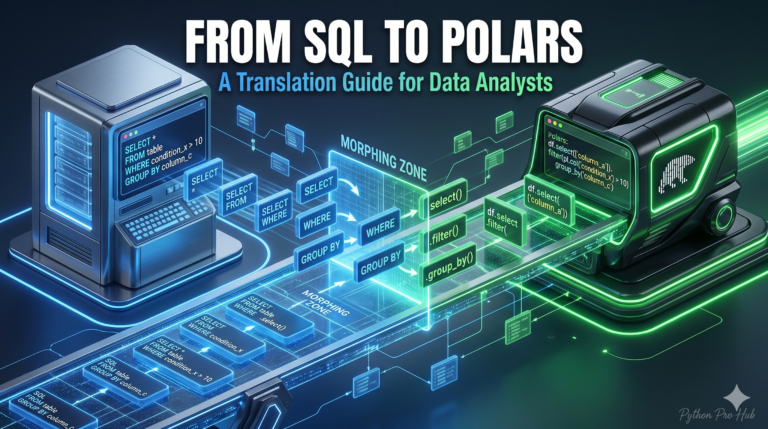
If you already know SQL, you fundamentally understand how Polars operates. Unlike Pandas, which forces you into an imperative, row-by-row mindset, Polars is built on…