
How to Fix: AttributeError: ‘float’ object has no attribute ‘x’
This is a fundamental AttributeError that means: “You are trying to use a method (like .append() or .lower()) on a simple decimal number (a float).”…

This is a fundamental AttributeError that means: “You are trying to use a method (like .append() or .lower()) on a simple decimal number (a float).”…
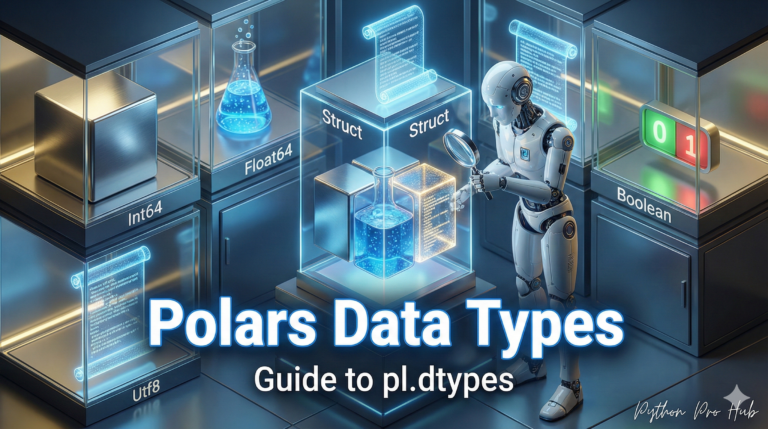
In Polars, choosing the correct data type (or “dtype”) is the most important step for performance and memory usage. Using a massive Int64 for a…
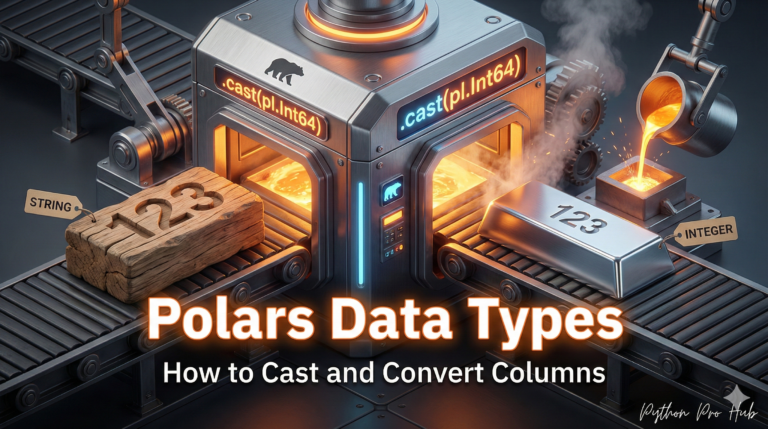
When you load a CSV, Polars (and Pandas) often guesses the data types. Sometimes, it guesses wrong, loading a number column (like 5.0) as a…

This is a fundamental AttributeError that means: “You are trying to use a method (like .append() or .lower()) on a simple number (an integer).” This…
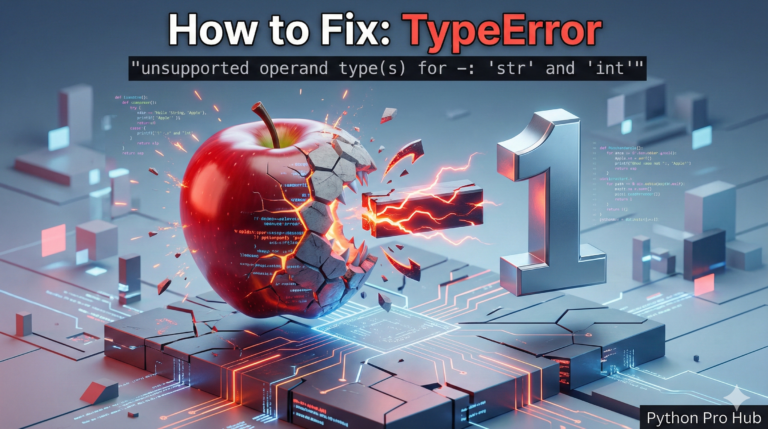
This TypeError is the cousin of TypeError: unsupported operand type(s) for +. It means: “You tried to use a math operator (like -, *, /)…
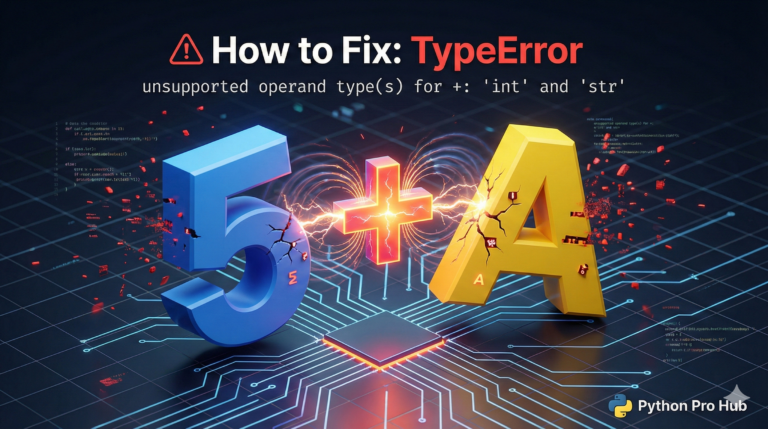
This error is the opposite of the common string concatenation error. It means you tried to do math (+), but one of your items was…

Python is strongly typed. It refuses to guess what you mean if you try to combine different data types, often leading to a TypeError can…
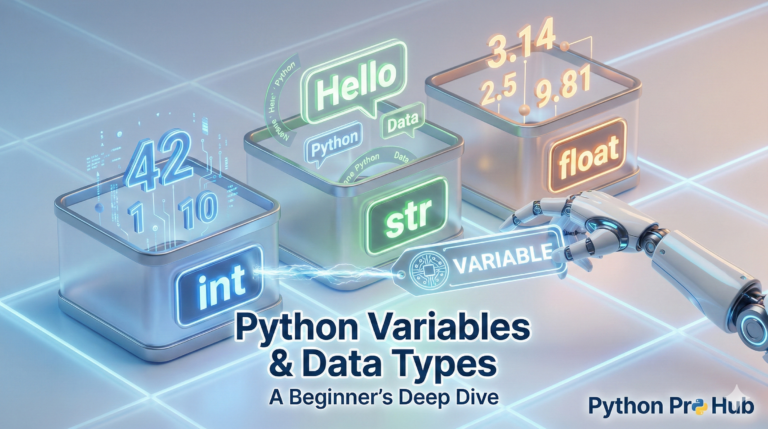
In Python, understanding Python Variables & Data Types is crucial as everything is an object, and every object has a “type.” Understanding this is the…