
How to Fix: ValueError: list.remove(x): x not in list
This is a common ValueError that occurs when you try to remove an item from a list, but that item isn’t in the list. The…
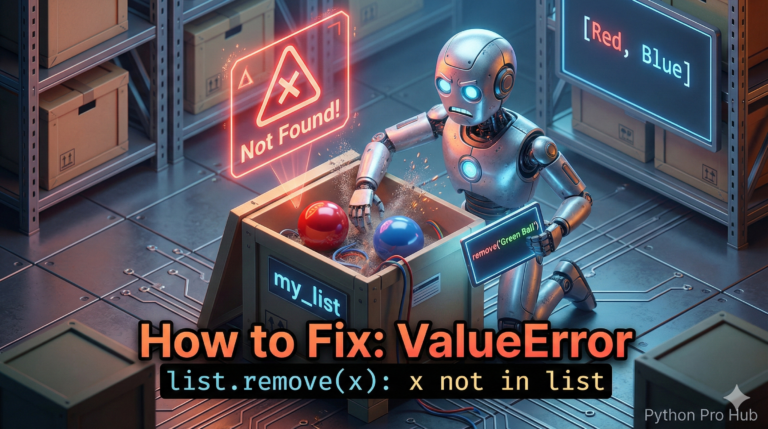
This is a common ValueError that occurs when you try to remove an item from a list, but that item isn’t in the list. The…
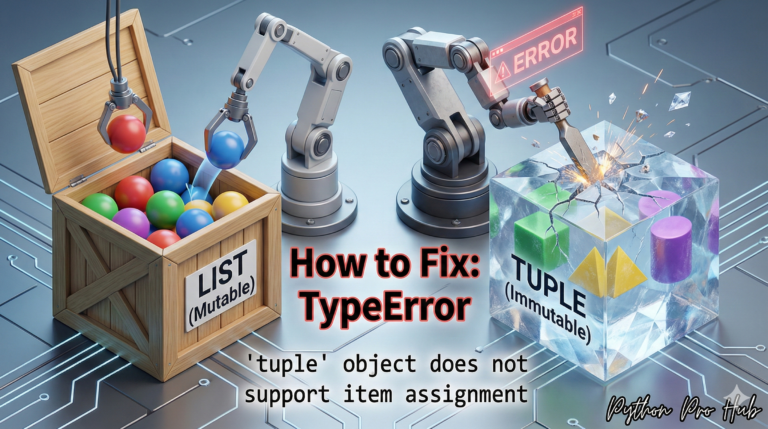
This error is the “twin” of the AttributeError: ‘tuple’ object has no attribute ‘append’. The TypeError tuple item assignment Is a fundamental rule of Python:…
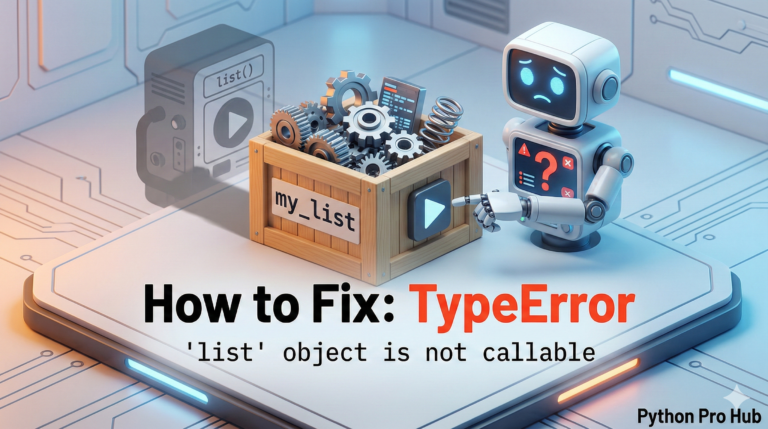
This TypeError list not callable means: “You are trying to use a list as if it were a function.” A “callable” is anything you can…

This is the most famous “gotcha” in all of Python: the Mutable Default Argument bug. It’s a bug that confuses every developer exactly once. Look…

This error is a perfect example of Python’s rules about Mutable vs. Immutable data. If you encounter an AttributeError tuple issue in your code, it’s…

This is the twin error to AttributeError: 'list' object has no attribute ‘x’. The AttributeError str object means you are trying to use a method…

This error happens when you use tuple unpacking (assigning multiple variables at once) but the number of variables on the left doesn’t match the number…

In Python, everything is an object. One of the most common concepts you’ll encounter is Mutable vs Immutable Python. But some objects can change (Mutable),…

This is a classic misunderstanding of how Python lists work compared to arrays in other languages. One common error is the IndexError list assignment issue,…
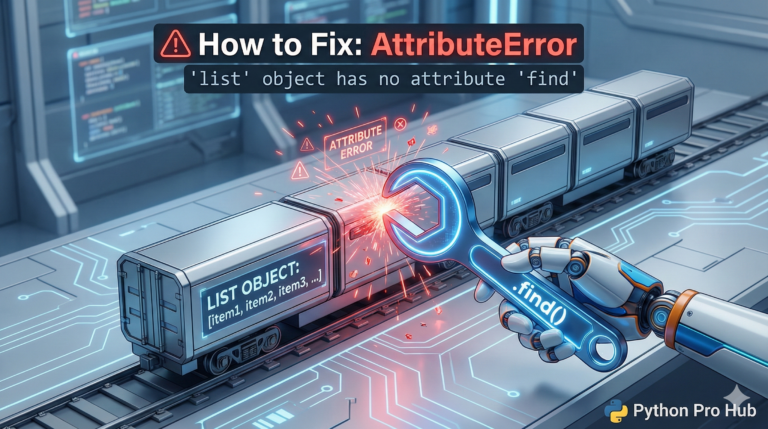
This AttributeError: ‘list’ object has no attribute ‘x’ means you are trying to use a specialized method (like a Pandas or Numpy feature) on a…