
Polars Window Functions: The over() Method (SQL Partition By)
We’ve used groupby().agg(), which collapses your data (e.g., 100 rows become 3 rows). In contrast, Polars window functions allow you to compute calculations across groups…
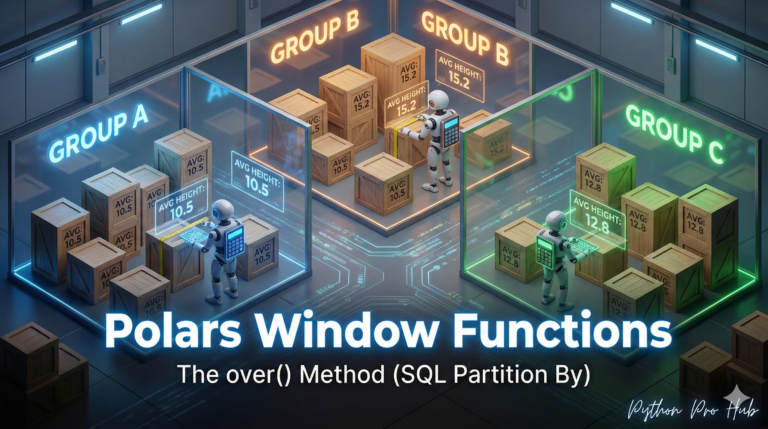
We’ve used groupby().agg(), which collapses your data (e.g., 100 rows become 3 rows). In contrast, Polars window functions allow you to compute calculations across groups…

We’ve used tokenizers to prepare data for AI models. But how do they work? If you’re interested in a deeper understanding, we’ll explore how Hugging…

This is the first, and most common, error every Python programmer encounters: NameError ‘…’ not defined. It has a very simple meaning: “You asked me…

We’ve used .join() to combine data based on a key (like a SQL JOIN). But what if you just want to stack two DataFrames on…

This is a true “2026 Vision” project. Hugging Face VQA is at the core of what we’re building—we’re giving our AI eyes and a brain….

This TypeError module not callable means you are trying to “call” an entire Python file (a module) instead of the specific function inside that file….
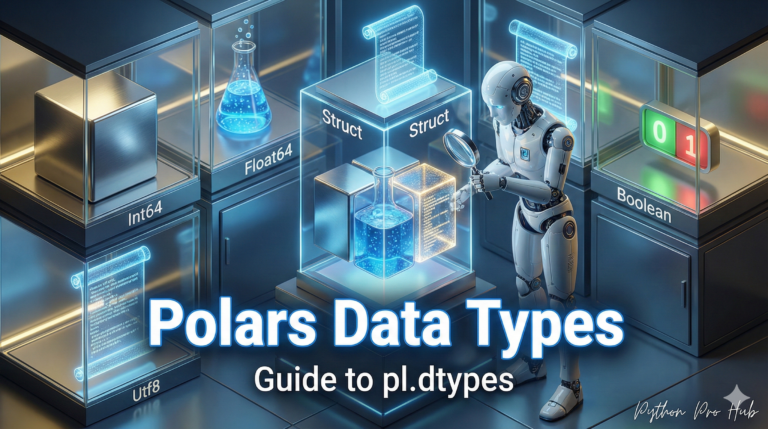
In Polars, choosing the correct data type (or “dtype”) is the most important step for performance and memory usage. Using a massive Int64 for a…

This article serves as a Hugging Face datasets guide. We’ve used the datasets library to load data for fine-tuning, but what is it? It’s a…
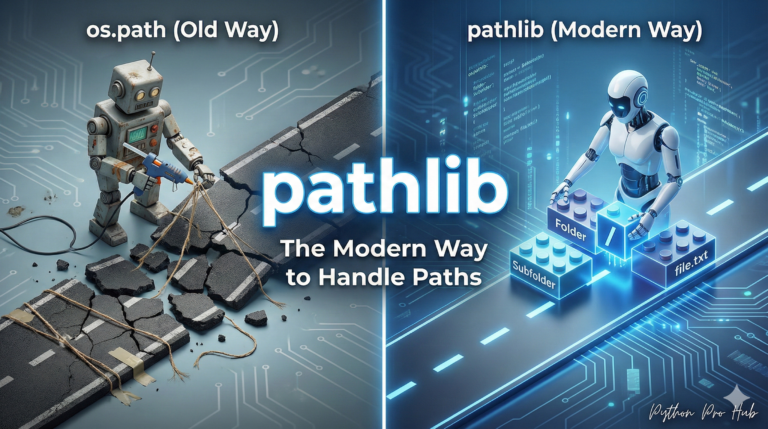
For decades, Python developers manipulated file paths using the os module. This Python pathlib guide aims to introduce a more modern and efficient approach to…

While Parquet is the fastest format, the business world runs on Excel. Polars read Excel Via a read_excel function to load these files directly into…