
Time-Series Magic: The Polars join_asof (Merging Non-Exact Times)
In standard data (SQL), you join on exact matches (ID = ID). In time-series data (Finance, IoT), timestamps rarely match exactly, which is where Polars…

In standard data (SQL), you join on exact matches (ID = ID). In time-series data (Finance, IoT), timestamps rarely match exactly, which is where Polars…

This “capstone” project combines all the Polars time-series skills you’ve learned. In this exercise, you’ll put Polars Time-Series Analysis techniques into practice. Goal: Take noisy,…

We’ve covered two types of window functions in Polars. Now, we’ll look at how to use Polars group_by_rolling functionality. group_by_rolling() is the third type. It’s…

Real-world data is often “sparse.” You might have sales data for Monday and Friday, but nothing for Tuesday, Wednesday, or Thursday. This is where polars…

We’ve learned how to group time by month (using group_by_dynamic), but what about calculating a “7-day moving average”? This is where Polars rolling functions can…

Just loading dates isn’t enough. For real analysis, you need to “engineer features” from them, like “What day of the week do most sales happen?”…
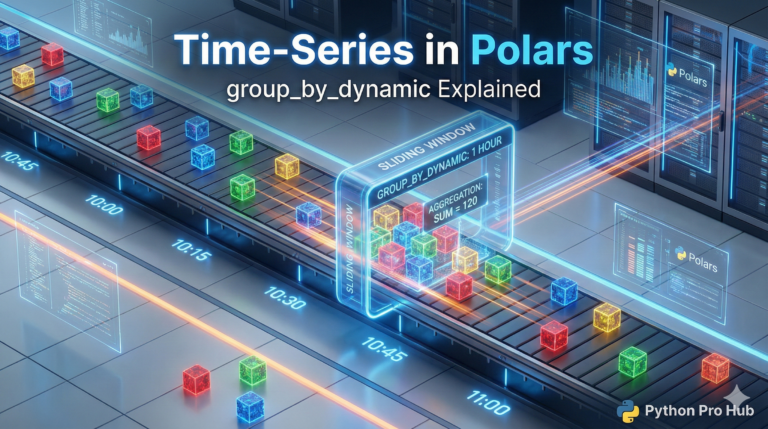
One of the most common tasks in data analysis is “resampling” time data. For example, turning a list of daily sales into “Total Monthly Sales.”…
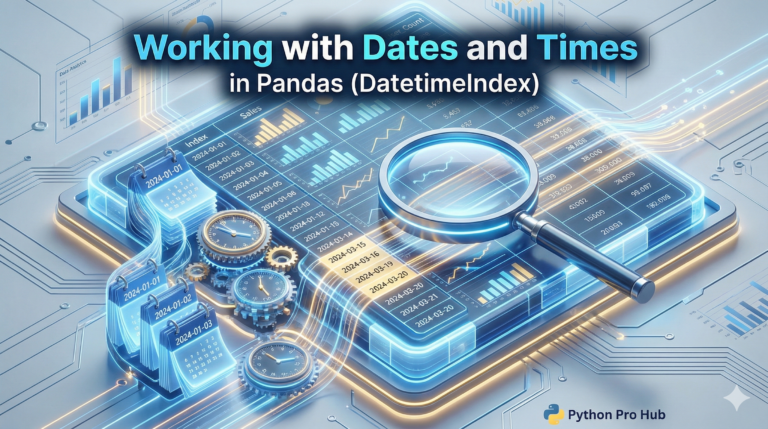
If you load a CSV with dates, Pandas usually reads them as simple strings (objects). To do real analysis like “Calculate monthly average sales“, you…