
Django File Uploads: How to Add Images to Your Models
Let’s add a “profile picture” or “post image” to your models. Working with Django File Uploads means handling files involves three key parts: the Model,…
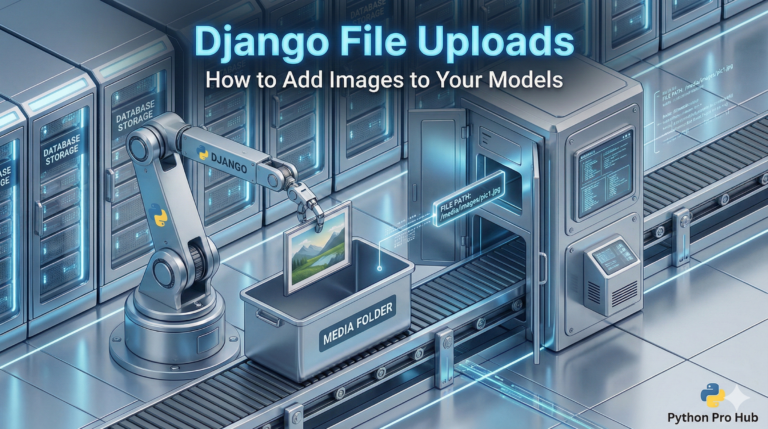
Let’s add a “profile picture” or “post image” to your models. Working with Django File Uploads means handling files involves three key parts: the Model,…

You deployed your Django app, but it looks terrible—all the CSS and images are missing! This is a common issue that can often be resolved…

You can Create (Forms) and Read (List/Detail Views) data. Now let’s finish the set with Update and Delete, using Django UpdateView DeleteView for these operations….
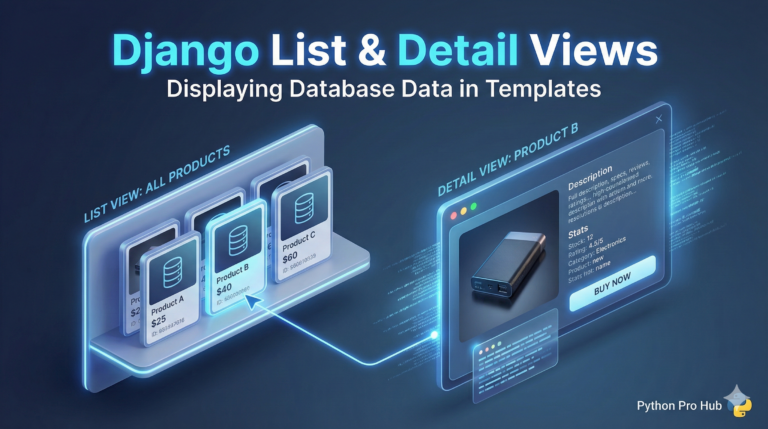
So far, we have Models with data and Templates with HTML. Now, we’ll connect them using Django List View and Detail View to show your…

Your Django site works, but it’s just plain HTML. To make it look professional, you need CSS, JavaScript, and images. For an in-depth Django Static…

You’ve built a Django app. It works today, but will it work tomorrow after you change some code? If you want to understand the essentials…

A website isn’t much fun if you can’t have users. Django User Authentication provides a robust solution for managing users and access. Building a secure…

You’ve built a great Flask App or Django Project, but it only runs on your own computer (localhost:8000). So, how do you deploy your Python…

You’ve seen them before. In Flask, you use @app.route("/"). In Django, you might see @login_required. These are Decorators, and understanding Python decorators can significantly enhance…

HTML forms are painful. You have to write the <input> tags, handle the POST request, validate that the user didn’t leave fields blank, and show…