
How to Fix: TypeError: ‘dict’ object is not callable
Beginners often encounter the TypeError dict not callable message when coding, which usually happens when confusing the syntax for functions and data structures. It means:…
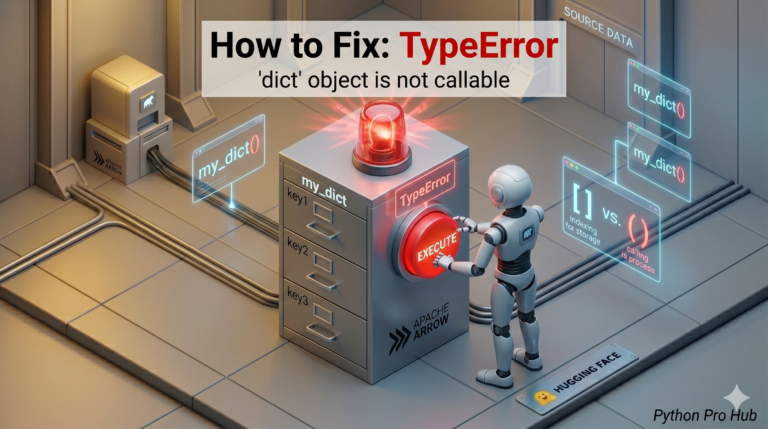
Beginners often encounter the TypeError dict not callable message when coding, which usually happens when confusing the syntax for functions and data structures. It means:…
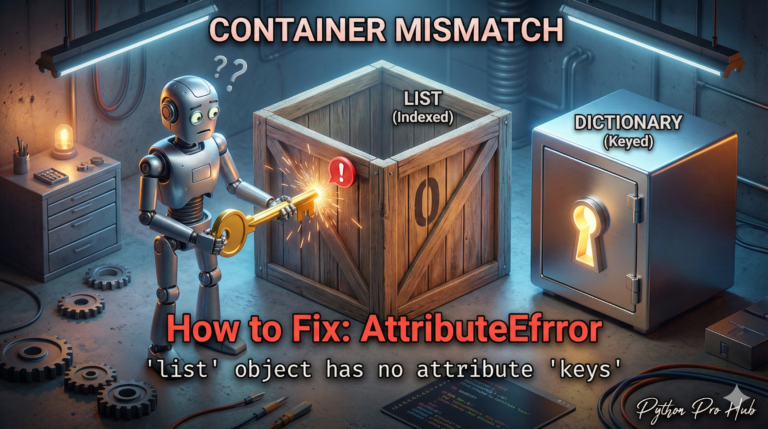
This AttributeError list keys issue is a classic “wrong data type” error. It means: “You are trying to use the .keys() method on a List,…
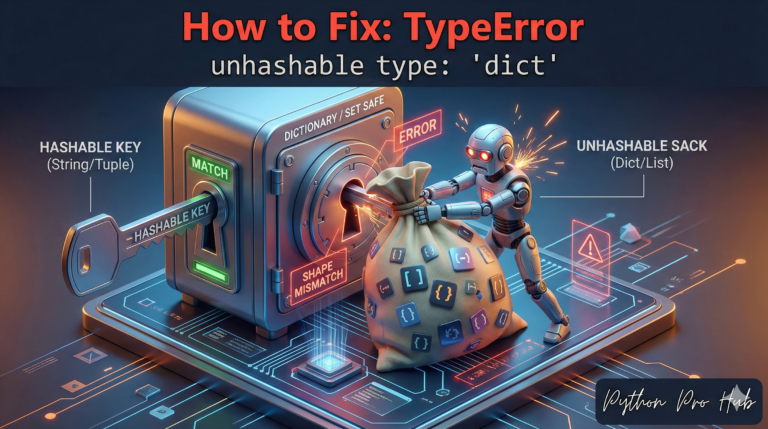
This TypeError unhashable dict is a direct cousin to unhashable type: ‘list’. It’s a core Python rule: You cannot use a mutable (changeable) object as…

This TypeError dict_values completes the set of dictionary “view” errors, along with dict_keys. It means: You are trying to use square brackets [] on a…
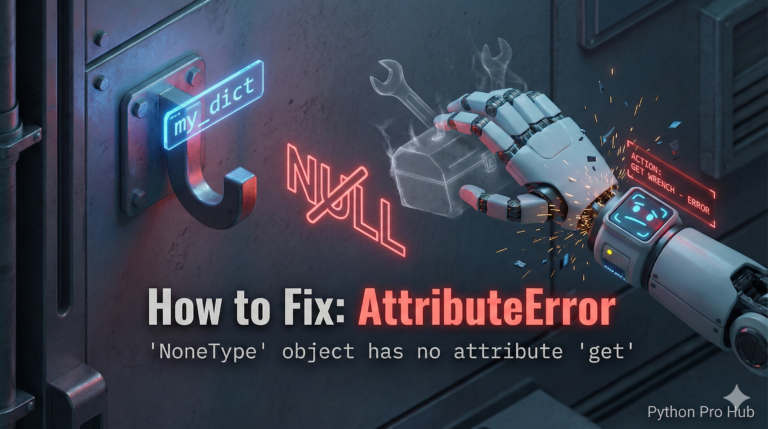
This error is a more advanced version of the typical KeyError. the AttributeError NoneType get, means: “You tried to use the .get() method, but the…

A KeyError is a message from Python saying: “You asked me to find a key in a dictionary, but that key does not exist.” If…

This TypeError dict_keys error means you are trying to use square brackets [] on a dict_keys object, which isn’t allowed. A dict_keys object is the…
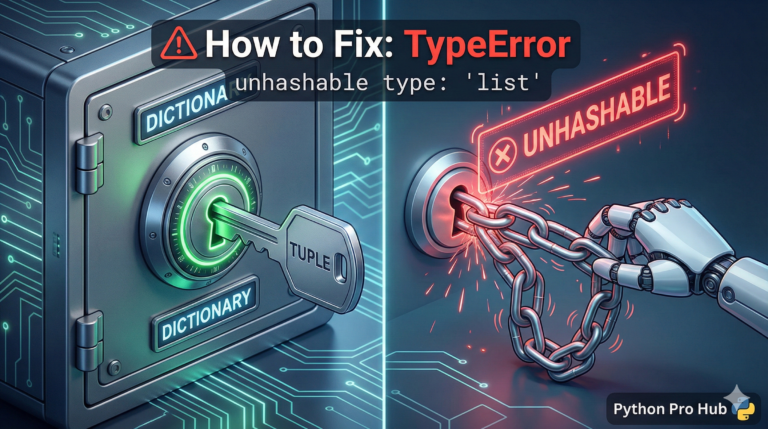
This error is a core Python concept. The TypeError unhashable type message means you tried to use something “changeable” (mutable) in a place that requires…
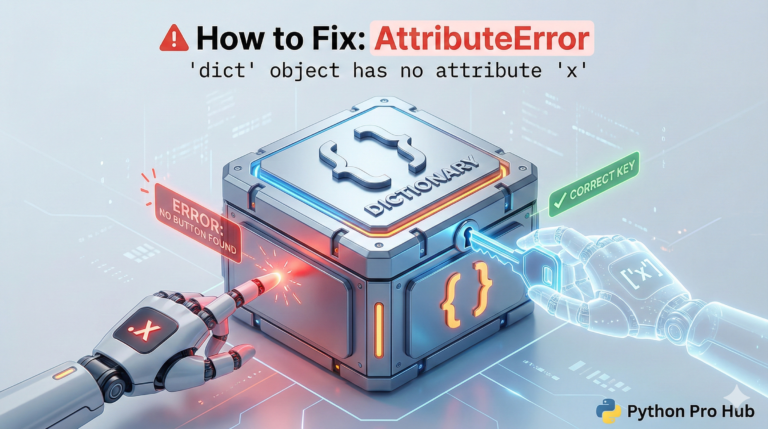
This is a classic “dot vs. bracket” confusion. If you’ve ever encountered an AttributeError dict object message in your code, you’re not alone. You have…
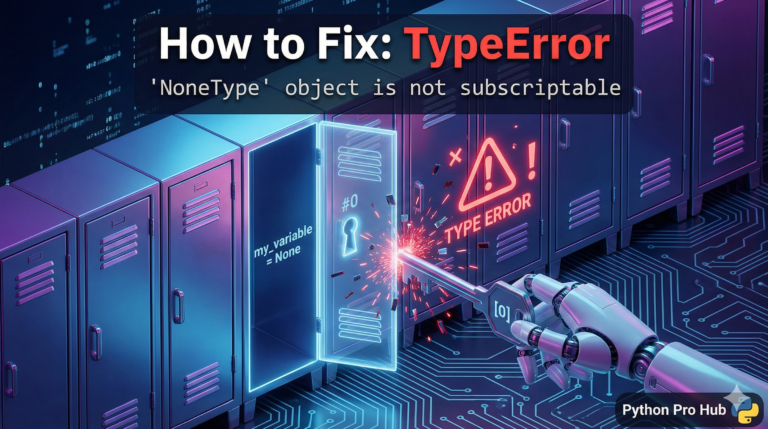
This error is a close cousin to AttributeError: 'NoneType', In Python, the error message NoneType object is not subscriptable usually appears if you try to…